Source Eco Friendly Standing Wine Display Rack for Home, Office, and Party
Source an eco friendly standing wine display rack from 30 verified listings. Buyers can compare solid wood and metal options with customizable sizes, wall-mounted designs, and eco-friendly features for home, office, and party applications.
Key considerations
Products List
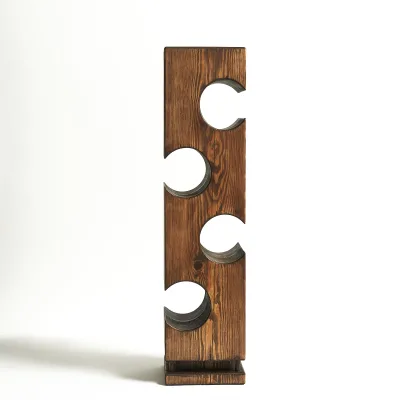
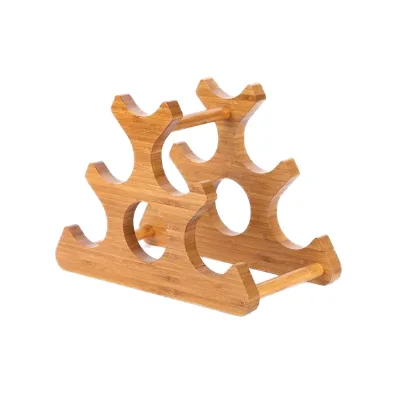
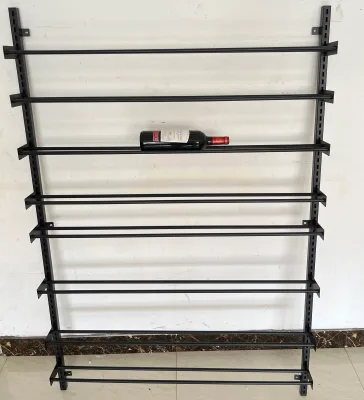


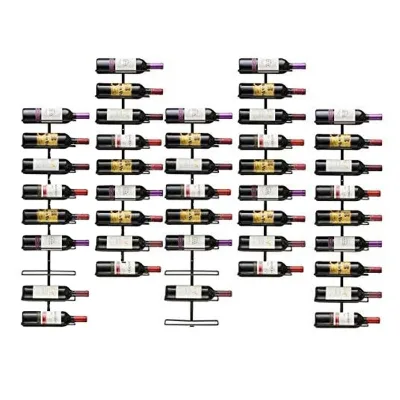




Comprehensive Sourcing Guide
Strategic Sourcing Guide for Eco-Friendly Standing Wine Display Racks
Understanding Product Attributes and Functional Diversity
When initiating a procurement search for an eco-friendly standing wine display rack, buyers must first distinguish between the specific functional definitions observed in the current market. The term "standing wine display rack" often encompasses a broad spectrum of product types, ranging from simple single-bottle holders to complex, multi-tiered storage systems. Based on current market observations, the category includes products explicitly defined as "wine bottle holders" and "Buckets, Coolers & Holders," alongside items classified as "Storage Wall Mounted Cube Shelves." This distinction is critical because a unit designed for wall mounting with a cube configuration may not satisfy the spatial or structural requirements of a freestanding display intended for a retail floor or a large event venue.
The material composition is a primary differentiator in this category. Sourcing data indicates a prevalence of solid wood and general wood products, which aligns with the "Eco-Friendly" attribute often requested by buyers. However, the market also presents metal alternatives, specifically those with powder-coated surface treatments. While wood offers a natural aesthetic suitable for "Home Office" and "Home" applications, metal units provide durability and are often marketed for "Supermarkets and Stores." The "Eco-Friendly" feature is a recurring attribute across these diverse material types, suggesting that sustainability claims are not limited to natural timber but may also apply to recycled metals or sustainable manufacturing processes. Buyers must verify that the specific "standing" configuration they require is compatible with the material's structural integrity, as some wood products are optimized for "indoor" use, while others are rated for "Outdoor" environments.
Technical Specifications and Customization Parameters
Technical due diligence requires a granular analysis of the specifications provided by potential suppliers. The market data reveals significant variability in physical dimensions and packaging. For instance, observed single package sizes range from compact units measuring 28x25x42 cm to larger configurations reaching 65x80x80 cm. This variance directly impacts logistics costs and warehouse storage requirements. The "Product Size" is frequently listed as "customized," indicating that many suppliers operate on a made-to-order basis rather than maintaining a rigid inventory of standard dimensions.
The "Model Number" serves as a unique identifier for these variations, with examples such as EGC-240812-20 and BH-CT-26011209 appearing in the dataset. These identifiers often correlate with specific design styles, such as "Contemporary" or "MODERN," and functional orientations like "Vertical" or "Horizontal." Buyers should note that while some units are designed for "Wall Mounted" installation, the core keyword focuses on "standing" racks. Therefore, verifying the "installation" method is essential to ensure the product is self-supporting. Additionally, the "number_of_shelves" is a critical specification; some observed units feature a single shelf, while others may offer multi-tier configurations. The "Capacity" is also listed as "Customized," meaning the volume of wine bottles the rack can hold is often negotiable based on the buyer's specific layout needs.
Cost Drivers and Minimum Order Quantity Analysis
The financial landscape of sourcing these units is influenced heavily by the Minimum Order Quantity (MOQ) and the complexity of customization. Market observations indicate an MOQ range spanning from 1 to 500 pieces. However, specific high-confidence data points to an MOQ of 500 pieces for certain product lines, particularly those involving custom branding or specific material treatments. This high threshold suggests that buyers seeking smaller quantities may face higher per-unit costs or limited supplier options. The "Selling Units" are typically listed as "Single item," which implies that pricing is often calculated per individual rack rather than per pallet or set, though bulk discounts may apply.
Payment terms are another significant cost driver, with observed methods including "Paypal," "Western Union," and "Alipay Online." These options suggest a mix of B2B and B2C transaction models, which can affect the negotiation leverage and payment security for international buyers. The "Single gross weight" varies considerably, with observed values of 1.500 kg and 3.000 kg. This weight difference is a direct function of the material density (wood vs. metal) and the size of the unit, directly influencing freight costs. Buyers must calculate the total landed cost by factoring in these weight variations and the "Standard Packing" requirements, which may or may not include protective materials for long-distance shipping.
Compliance, Certification, and Sustainability Verification
While the "Eco-Friendly" attribute is prominently listed, the absence of specific certification names in the provided data necessitates a rigorous verification process by the buyer. The term "Eco-Friendly" is an observation rather than a guaranteed certification status. Buyers must not assume that a product labeled as such automatically meets international environmental standards without independent validation. The sourcing guide emphasizes that suppliers should be asked to provide documentation regarding the origin of the wood, such as FSC (Forest Stewardship Council) certification, or evidence of sustainable forestry practices.
For metal units, the "powder coated" surface treatment is a key specification. Buyers should inquire about the chemical composition of the powder coating to ensure it is free from volatile organic compounds (VOCs) or heavy metals, which are common concerns in eco-friendly manufacturing. The "Place of Origin" data points to major manufacturing hubs in China, specifically "Shandong," "Guangdong," and "Fujian." While these regions have established supply chains, buyers should verify that the manufacturing facilities adhere to local environmental regulations and international labor standards. The "Sample Time" of 20 days for certain items indicates that the production cycle may be extended for custom orders, which is a factor in planning compliance audits before mass production begins.
Supplier Evaluation and Geographic Considerations
Evaluating suppliers requires a focus on their location, brand identity, and operational capabilities. The dataset identifies several brand names, including "enjoyglobal," "BETENSH," and "GoodLeader," operating out of different provinces. The geographic distribution suggests that buyers can source from multiple regions, each potentially offering different logistical advantages. For example, suppliers in "Guangdong" may have better access to port infrastructure compared to those in "Shandong" or "Fujian," potentially reducing lead times for export.
The "Brand Name" and "Logo" options are crucial for buyers looking to private label. The data confirms that "Customized Logo" is available, allowing businesses to brand the racks for their specific retail environments. However, the presence of a brand name does not guarantee quality; it is merely an identifier. Buyers should assess the supplier's "Sample Time" and "Assembly" requirements. Products described as having "easy assembly" are preferable for large-scale deployments where labor costs are a concern. Furthermore, the "Feature" list includes "Stocked" items, which may offer faster delivery times compared to fully customized orders. A thorough supplier evaluation should include a request for past performance data, specifically regarding their ability to meet "Eco-Friendly" claims and their history with "Customized" orders.
Quality Control and Long-Term Procurement Strategy
Quality control for wine display racks involves inspecting structural stability, finish durability, and material consistency. For wood products, buyers should verify the "solid wood" quality to ensure resistance to warping, especially in environments with fluctuating humidity. The "Design Style" being "Contemporary" or "MODERN" implies a need for precise joinery and finish quality. For metal units, the "powder coated" finish must be tested for adhesion and resistance to chipping, which is vital for high-traffic areas like "Supermarkets and Stores."
Long-term procurement considerations include the "Antitheft" feature, which is noted as "Not Antitheft" in some observed listings. This is a critical gap for buyers in retail environments where security is paramount. Procurement strategies should address this by either selecting racks with integrated security features or planning for additional security measures. The "Usage" scope, ranging from "Home" to "Party" and "Supermarkets," dictates the durability requirements. A rack used for a "Party" may have different wear-and-tear expectations than one used for permanent "Storage + decoration" in a "Home Office."
Buyers should also consider the "Packing" standards. "Standard Packing" may suffice for domestic use but might require reinforcement for international shipping to prevent damage. The "Single package size" and "Single gross weight" data provided earlier are essential for calculating shipping volumes and ensuring that the packaging can withstand the rigors of transit. Finally, the "Customization" availability allows for long-term adaptability. As retail trends shift, the ability to modify the "Size," "Color," or "Pattern" of the racks ensures that the procurement investment remains relevant over time. By focusing on these technical and operational details, buyers can build a resilient supply chain for eco-friendly wine display solutions.
Comparative Analysis of Product Variants
To assist in decision-making, the following table summarizes key differences observed between the primary product categories available in the market. This comparison highlights the trade-offs between material, application, and logistical requirements.
| Feature | Wood-Based Units | Metal-Based Units |
|---|---|---|
| Primary Material | Solid Wood / Wood | Metal (Powder Coated) |
| Typical Application | Home, Home Office, Indoor | Supermarkets, Stores, Outdoor |
| Design Style | Contemporary, Natural | Modern, Industrial |
| Installation Type | Wall Mounted or Standing | Wall Mounted or Standing |
| Weight (Approx.) | 1.500 kg - 3.000 kg | Variable (Depends on Gauge) |
| Eco-Feature | Natural Material | Recyclable / Powder Coating |
| Customization | High (Size, Color, Logo) | High (Size, Color, Logo) |
| Security | Not Antitheft | Not Antitheft |
This comparison underscores that while both categories can meet the "Eco-Friendly" and "Customized" criteria, the choice depends heavily on the intended "Display Place" and the required durability. Buyers must align these technical attributes with their specific operational needs to ensure the selected rack performs effectively in its designated environment.
FAQs
What materials are used for eco friendly standing wine display racks?
Products are typically made from solid wood or metal with powder coating. Solid wood units suit home offices, while metal options are durable for supermarkets and outdoor use.
Can I customize the size and logo on these wine racks?
Yes, product size and logo customization are available for most models. Buyers can request specific dimensions and branding, though sample times may extend to 20 days for custom orders.
What is the minimum order quantity for these display racks?
The minimum order quantity ranges from 1 to 500 pieces depending on the supplier. Some specific product lines require a minimum of 500 pieces for custom branding or treatments.
Where are these wine bottle holders manufactured in China?
Manufacturing locations include Shandong, Guangdong, and Fujian provinces. Buyers can source from these regions, each offering different logistical advantages for international shipping.
How do I verify the eco-friendly claims for these racks?
The eco-friendly attribute is an observation, not a guaranteed certification. Buyers should request documentation on wood origin or powder coating composition to validate sustainability claims independently.
What is the typical weight and packaging for these units?
Single gross weights range from 1.500 kg to 3.000 kg depending on material. Units use standard packing, with package sizes varying from 28x25x42 cm to 65x80x80 cm.